From Inspiration to Action: How a Student Workshop Sparked a Campus Sustainability Initiative at IHEC Carthage, Tunisia
Context
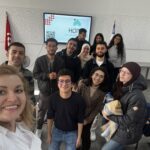
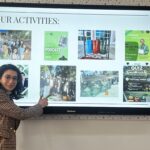
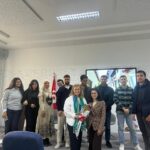
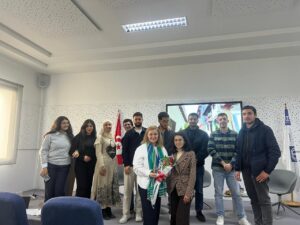
Chief Assist. Prof. Dr. Violeta Toncheva-Zlatkova from the University of National and World Economy (UNWE), Bulgaria, presented the HOME Project – The House of Engagement and More (co-funded by the Erasmus+ Programme KA220-HED – Cooperation Partnerships in Higher Education, Project No. 2024-1-ES01-KA220-HED-000255511) to members of the 3ZERO Campus Club IHEC Carthage, University of Carthage, Tunisia. The presentation introduced the project’s vision of civic engagement, active citizenship, sustainability, and youth empowerment.
After, the highly interactive workshop was designed as a space for dialogue, collaboration, and co-creation, encouraging students to identify concrete ways of creating positive change within their university community. The workshop itself reflected the HOME philosophy by combining active participation, experiential learning, teamwork, and community-oriented thinking.
The challenge
One of the central questions discussed during the workshop was: How can student engagement be transformed into visible and meaningful action?
Students explored the relationship between awareness and action, discussing how universities can become spaces where sustainability and civic responsibility are not only taught but also practiced. Through interactive exercises, team challenges, brainstorming sessions, and the specially designed “Mission (Im)possible” activity, participants reflected on how small initiatives can mobilize communities and create lasting impact.
A key conclusion emerged from the discussions: Awareness matters, but action makes the difference.
From idea to initiative
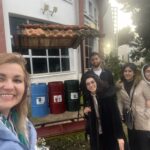
The workshop discussions revealed several important insights about student engagement at IHEC Carthage. Members of the 3ZERO Campus Club shared that although the university hosts different student organizations and clubs, collaboration between them remained limited. Most initiatives were implemented within individual clubs, with few opportunities for joint action and wider campus participation. At the same time, students presented their existing sustainability efforts, including the installation of separate waste collection bins on campus. During the exchange of ideas, the Bulgarian initiative “Caps for Future” was introduced as an example of how a simple environmental campaign can mobilize volunteers, raise awareness, and create a visible social impact.
The discussion quickly moved beyond recycling itself. Students began exploring how separate waste collection could become more engaging and visible for the entire university community. Together, participants reflected on ways to attract more volunteers, connect sustainability with creativity, and create a project that would leave a lasting mark on campus. Following the workshop, members of the 3ZERO Campus Club revisited their recycling area and redesigned it by adding a dedicated collection point for plastic caps. This became the starting point of a broader volunteer initiative.
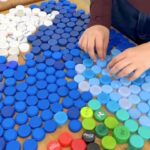
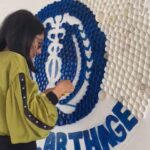
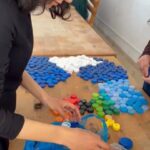
Students organized a campus clean-up campaign, collecting discarded plastic bottles and separating the caps for future use. The activity gradually attracted additional volunteers and generated interest beyond the club itself. What started as a sustainability action soon evolved into a collective effort involving students from different backgrounds and interests. The ideas generated during the workshop continued to develop in the weeks that followed. Students reflected on the importance of creating a visible symbol of engagement that could represent both sustainability and student leadership. As a result, the collected caps were transformed into a creative campus artwork in collaboration with Art Revolution student club.
The final installation became the crystallization of all the discussions, reflections, and shared ideas that emerged during the HOME-related workshop. More than a recycling project, it became a symbol of how dialogue, volunteering, creativity, and collective action can come together to create meaningful change within a university community.
The result
The final artwork became far more than a recycling initiative. Created entirely from collected plastic caps, the installation represents sustainability, creativity, teamwork, and student leadership. Every cap incorporated into the project symbolizes an individual contribution to a collective effort.
The project created a visible and lasting reminder that sustainability can be expressed through creativity and community participation. More importantly, it demonstrated that meaningful change does not necessarily begin with large budgets or institutional programmes. Sometimes it begins with an idea, a conversation, and a group of motivated students willing to take action.
Impact
The initiative generated impact on several levels:
Student impact
- Increased student participation in sustainability-related activities;
- Encouraged volunteering and active citizenship;
- Strengthened students’ sense of ownership and belonging to the university community;
- Developed teamwork, leadership, and project management skills.
Campus impact
- Created a permanent visual symbol of sustainability and engagement;
- Increased awareness of recycling and circular economy principles;
- Enhanced the visibility of student-led initiatives across campus.
Community impact
- Fostered collaboration between students, university leadership, and external partners;
- Demonstrated the potential of volunteer-driven sustainability projects;
- Encouraged broader conversations about environmental responsibility.
International impact
- Showcased how Erasmus+ mobility and HOME activities can inspire local action;
- Strengthened cooperation between UNWE and IHEC Carthage;
- Demonstrated the transferability of engagement-based educational approaches across different cultural contexts.
HOME dimension
This initiative directly reflects several core principles of the HOME Project:
- Active Citizenship: Students moved from discussion to action, taking responsibility for a project that benefits their campus community.
- Collaboration: The project was created through cooperation among students, volunteers, university representatives, and external partners.
- Social Responsibility: The initiative promoted responsible consumption and sustainable practices through practical engagement.
- Empowerment: Students were encouraged to develop and implement their own ideas, becoming agents of change rather than passive participants.
- Community Building: The project strengthened connections among students and reinforced a shared sense of purpose and belonging.
- Sustainable Development Goals Addressed: The initiative contributes to several Sustainable Development Goals (SDGs): SDG 4 – Quality Education Promoting experiential learning, civic engagement, and sustainability awareness, SDG 11 –Sustainable Cities and Communities Encouraging community participation and responsible use of resources, SDG 12 – Responsible Consumption and ProductionSupporting recycling and circular economy practices, SDG 13 – Climate Action Raising awareness about environmental responsibility through student-led action. SDG 17 –Partnerships for the Goals: Creating collaboration among students, universities, and external stakeholders.
- Inner Development Goals (IDGs): Beyond its visible environmental and community impact, the initiative also reflects the principles of the Inner Development Goals (IDGs), which emphasize the importance of developing the inner capacities needed to address complex societal challenges. The project provides a practical example of all five dimensions of the IDG Framework in action. Students demonstrated Being through personal responsibility and commitment to a shared cause; Thinking through creativity, problem-solving, and the transformation of a simple idea into an innovative campus initiative; Relating through empathy, trust, and the ability to engage others around a common purpose; Collaborating through teamwork, volunteer mobilization, and cooperation between student clubs, university representatives, and external partners; and Acting through perseverance, initiative, and the successful implementation of a project that generated visible and lasting impact. Rather than learning these capacities in theory, students experienced and practiced them throughout the entire process – from identifying a challenge and generating ideas, to mobilizing volunteers, redesigning the recycling space, organizing a campus clean-up campaign, collecting materials, and ultimately creating a permanent symbol of sustainability and engagement on campus. The project, therefore, illustrates how the IDGs can be translated into concrete action, empowering young people to become active contributors to sustainable development and positive social change.
Lessons learned
Several important lessons emerged from this experience:
- Student engagement becomes stronger when students are given ownership over ideas.
- Small projects can create significant symbolic and educational impact.
- Sustainability initiatives are more effective when combined with creativity and community participation.
- International mobility can generate meaningful local outcomes long after the visit has ended.
- Universities can serve as living laboratories where ideas are transformed into action.
Why this story matters?
What makes this initiative particularly valuable is that the final result was never planned as a formal project outcome. Instead, it emerged naturally from a process of dialogue, collaboration, and student-led creativity, demonstrating how educational encounters can trigger a chain reaction of engagement and collective action.
For the students of IHEC Carthage, the installation is more than a wall of recycled caps.
It is a symbol of participation.
It is a visible expression of student ownership and initiative.
It is proof that ideas developed through dialogue can become tangible realities.
And it reminds everyone who passes by that lasting change often begins with a simple question, a shared vision, and the courage to act.
Beyond the installation: The power of mentorship and shared ownership
Perhaps the most remarkable aspect of this story is that the final artwork was never the original objective. The real achievement lies in the journey that transformed a conversation into a movement, an idea into collective action, and a workshop into a lasting campus legacy.
Throughout the process, the role of the HOME-inspired workshop extended beyond inspiration. The discussions created a space where students could challenge existing practices, identify opportunities for greater collaboration, and envision new forms of engagement. The initiative was nurtured through continuous encouragement, mentoring, and follow-up exchanges, allowing the original idea to evolve organically into a student-led project with tangible impact. It became an interdisciplinary initiative that combined volunteering, environmental responsibility, creativity, student leadership, and community building.
The project activated volunteers, improved sustainability practices on campus, strengthened cooperation among students, and created a visible symbol of shared responsibility. It also demonstrated how engagement can spread beyond the boundaries of a single student club and inspire wider participation across the university community.
Each bottle cap collected represents a small individual action. Together, they tell a much larger story – a story about people who decided to contribute, collaborate, and take responsibility for the environment and for their community.
As an initiator of the original idea, mentor throughout the process, and continuous supporter of the students’ efforts, Dr. Violeta Toncheva-Zlatkova accompanied the project from its earliest discussions to its successful implementation. The true success, however, belongs to the students who embraced the idea, adapted it to their local context, invested their time and energy, and transformed it into a meaningful reality. The installation stands today as a powerful reminder that leadership is not only about generating ideas. It is about inspiring others to believe in them, take ownership of them, and carry them forward. Somewhere within that wall of recycled caps lives the contribution of every volunteer, every supporter, every student, and every conversation that helped shape the project. Together, they transformed sustainability into identity, creativity into impact, and a simple idea into a lasting symbol for future generations.
And perhaps that is the most important lesson of all: Real change begins when inspiration meets action, and when people choose to build something meaningful together.
This case demonstrates how the HOME Project continues to inspire engagement, sustainability, and youth-led action across university communities, proving that meaningful change can travel across borders, continents, languages, and cultures. What started as an exchange of ideas during an international mobility evolved into a student-led initiative with tangible impact, showing that shared values, creativity, and civic engagement can unite people regardless of geography or background. It is a powerful example of how dialogue can spark action, how inspiration can become ownership, and how local initiatives can emerge from global connections.